
The Trust funds research and innovation that benefits the UK textile industry and the people who work in it. Recent projects are described below, followed by a full list of earlier awards. Grants to help individuals develop their skills are listed separately on our Development of People page.
Recent projects
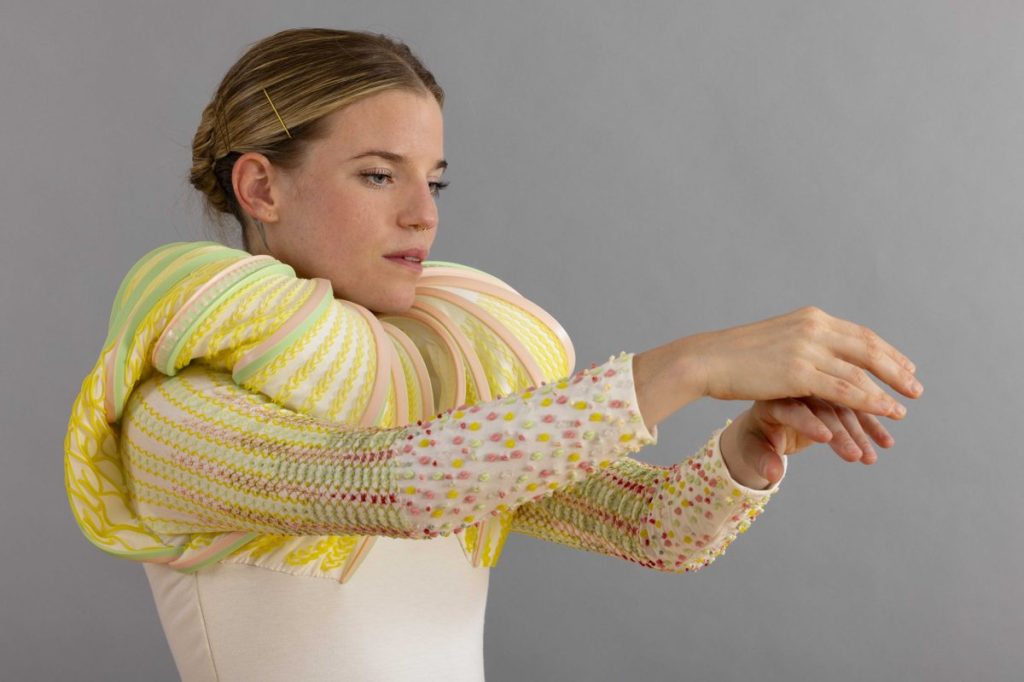
Textile Morphologies
Project lead: Arantza Vilas, with the Robotics Living Lab (RoLL), Manchester Metropolitan University
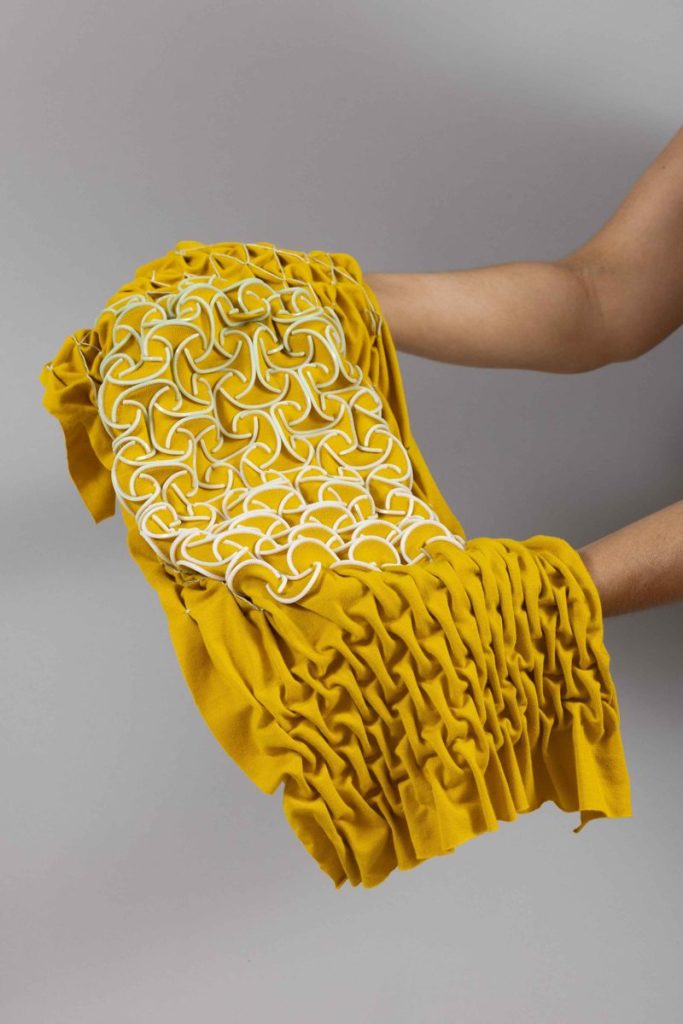
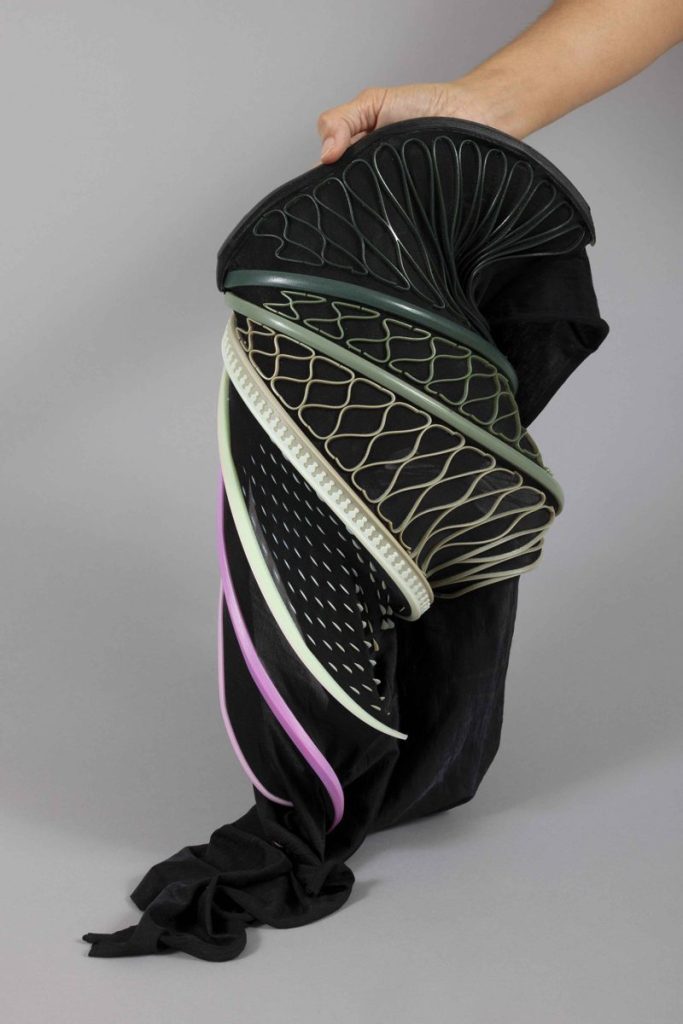
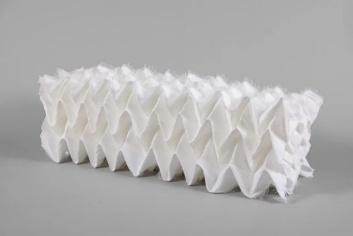
Textile Morphologies investigates how self-forming textiles can be crafted at the intersection of heritage craft and CAD systems. Led by textile researcher and artist Arantza Vilas, the project combines pleating, smocking and embroidery with direct-to-textile 3D printing on the Stratasys J850, producing meta-textiles in which structure and ornament emerge together. It was developed with the Robotics Living Lab (RoLL) at Manchester Metropolitan University, computational designer Alek Bursac, embroidery artist Michele Carragher and contemporary dancer Hanna Rudd, with costume for dance as its primary application context.
The project set out to establish repeatable workflows for translating heritage craft geometries into 3D modelling environments, and to test how printed geometries interact with the stretch behaviour of circular knit substrates to generate three-dimensional texture and form. It evaluated joinery systems, multi-material approaches, scale, material compatibility, finish quality and colour, while developing a visual language that holds both digital and hand-crafted sensibilities — including incorporating embroidery as methods of repair.
Its principal output is an extensive catalogue of samples on circular stretch substrates, accompanied by documented digital workflows and software workarounds, comparative geometry studies, and qualitative data on stretch behaviour and form-finding that supports the design of programmable, shape-changing textiles. Together these constitute a transferable process rather than a set of finished artefacts.
For costume and high-end garment production, the research demonstrates routes to complex three-dimensional form reducing componentry and waste. Additive processes deposit material only where needed, repair applications extend garment life, and the material data supports informed end-of-life decisions — contributing directly to circular economy objectives.
By pairing advanced machinery with craft knowledge rather than displacing it, Textile Morphologies positions costume as a testbed for innovation, with transfer routes into performance apparel, technical textiles and luxury fashion.
View the full visual report (PDF)
Advancing E-Textile Manufacturing with an Industrial Weaving Jacquard Loom
Project team: Abiodun Komolafe, Steve Beeby and Helga Nunes-Matos, University of Southampton
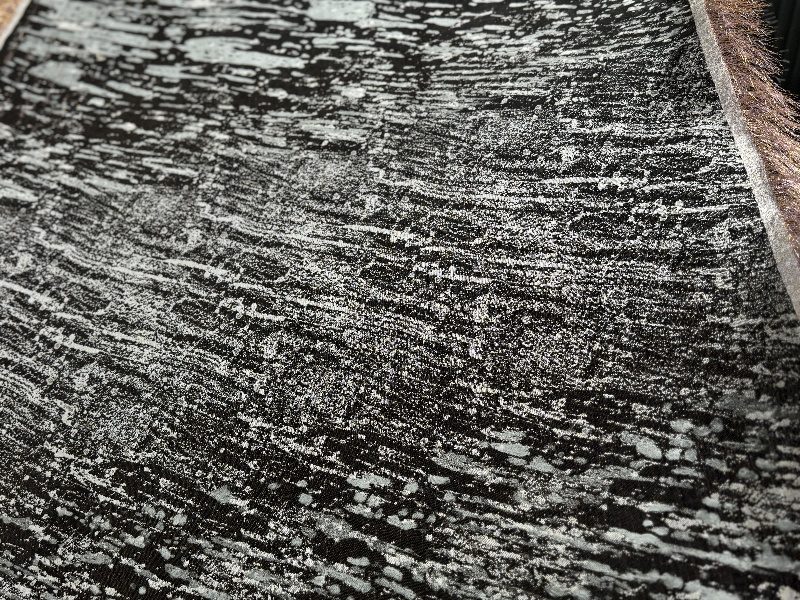
This project has established new capabilities for designing and manufacturing advanced woven e-textiles at the University of Southampton through the acquisition of Pointcarré Jacquard design software and its integration with a Bonas Jacquard loom. The original aim was to automate the integration of flexible electronic circuits into textiles using industrially relevant weaving processes.
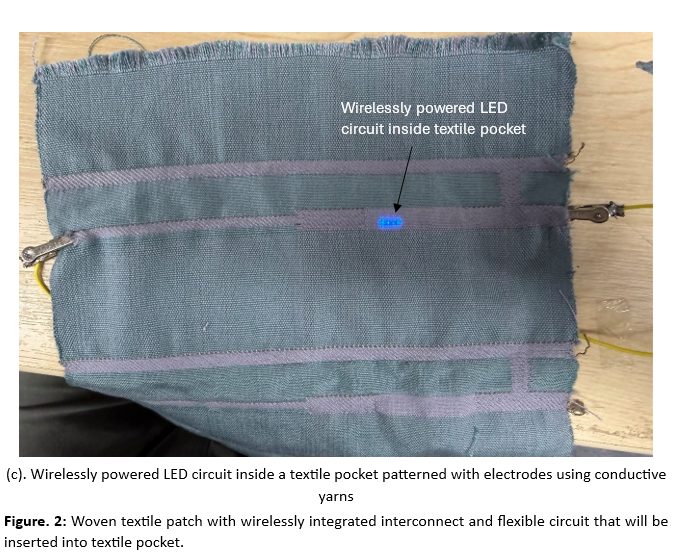
During the project, wiring and soldered interconnections were identified as a major barrier to scaling textile electronics, affecting both reliability and manufacturability. As a result, the research evolved towards developing textile-compatible alternatives that could be produced using conventional textile manufacturing techniques. This led to the development of woven conductive structures and the demonstration of wireless power transfer through textiles, enabling electronic modules to be powered without extensive wiring. The approach provides a potential pathway towards more scalable, reliable and aesthetically acceptable e-textile manufacturing.
The project also developed reconfigurable woven pocket structures that allow electronic components to be inserted and removed from textiles, supporting repair, reuse and end-of-life disassembly. These developments contribute to the growing need for more sustainable and circular e-textile products.
Beyond the technical research, the project has strengthened capability within the textile sector through knowledge exchange, training and collaboration. The Jacquard facility has been used to support local textile practitioners, engage with industry partners, and develop woven textile samples exhibited at SPINEXPO 2025. The work has generated interest from textile designers, manufacturers and cultural organisations, helping to build expertise in advanced Jacquard weaving and e-textile design.
A journal article describing the manufacturing approach and wireless textile interconnection technology is currently in preparation and will be made available upon publication. The paper is currently titled – “Capacitively coupled wireless interconnects for invisible e-textile circuits” aimed to be published in Nature flexible and printed electronics.
Sustainability Champions Network
Project lead: Textile Centre of Excellence
The Sustainability Champions Network, delivered by the Textile Centre of Excellence, is a high-impact initiative supporting UK textile manufacturers to develop practical, strategic and scalable approaches to sustainability.
The project engaged over 30 companies across the textiles sector, with a successful launch event in June 2025 attended by 52 representatives from 30 organisations. Strong demand for the programme led to oversubscribed workshops and direct support being provided to these 30 companies – significantly exceeding initial expectations and targets of one third of this number.
A key innovation of the project has been the introduction of a systems-thinking approach to sustainability, delivered through expert-led workshops facilitated by Dr Kamran Mahroof from the University of Bradford. This methodology combines strategic and analytical tools to help organisations identify root causes of sustainability challenges, understand interdependencies and prioritise high-impact actions.
Participants reported a clear shift in how sustainability is approached within their organisations, moving from compliance-driven activity towards more strategic, integrated decision-making. Workshops and targeted interventions were supported with a resource database and digital platform to support ongoing collaboration, knowledge sharing and access to resources across the sector.
The Sustainability Champions Network has demonstrated strong demand and clear value, providing a scalable foundation for continued growth. It has the potential to play a key role in strengthening the resilience, competitiveness and environmental performance of the world-class UK textile industry.
Bio-Inspired Textile Structure
Project lead: Arantza Vilas
The project explored how to create deployable, sustainable textiles. Read more
Cobot end effector cutting tool
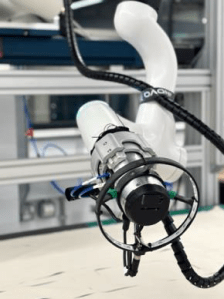
Project lead: Susan Postlethwaite, Manchester Fashion Institute, Manchester Metropolitan University
The project developed a safe, adaptable rotary cutting tool for collaborative robots, enabling precise, small-batch garment manufacturing. Download the report · Read more
UK Sustainable Denim Hub
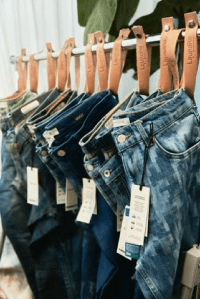
Project lead: LaundRe
CTRT has contributed to the development of circular denim processing. Read more
Previous awards
| Date | Project | Recipient |
|---|---|---|
| Oct 2024 | Bio-inspired deployable textiles: fabrication of deployable sustainable textiles for interior applications, combining the craft of pleating, the BIT framework (a novel methodology that uses lessons from biology) and 3D weave technology. See project | Pinaki Studios |
| Apr 2024 | No awards | – |
| Oct 2023 | Patterning Paisley: examining the creative, commercial and pedagogical potential of historic textile collections through contemporary textile practice. PhD exhibition, event and publication launch | The Glasgow School of Art |
| Oct 2023 | Advancing E-Textile Manufacturing with an Industrial Weaving Jacquard Loom (software funding). See project | University of Southampton |
| Apr 2023 | Conditional and partial funding for a laser machine for denim processing | LaundRe |
| Apr 2023 | Partial funding to test technology delivering natural and chemical dye to cellulosic yarn and fabric without the use of water or toxic chemicals | Hewitt Denim Mills |
| Apr 2023 | Equipment and consumables to test a new method for recycling blended textile waste | Loughborough University |
| Sept 2022 | Cobot end effector cutting tool. See project | Manchester Fashion Institute |
| Sept 2022 | Experiments in functionalisation of natural fibre for reinforcement in polymeric composites | Carr Reinforcements |
| Apr 2022 | Untapped Potential – the turning point for UK fashion and textiles (research project) | UK Fashion & Textile Association |
| Apr 2022 | Sustainability Strategy Programme Pilot. Evaluation report | Textile Centre of Excellence |
| Apr 2022 | BRISK 2: Hybrid Knitting | Baltex |
| Sept 2021 | Bioindigo scale-up | Bluegene Technologies |
| 2018 | Innovation Voucher Scheme | NW Textnet |
| 2018 | Design for Recycling Knitwear: a framework for sorting, blending and cascading in the mechanical textile recycling industry (PhD support). More information | Chelsea College of Arts and Design |
| 2017–2018 | Research into labour conditions in the textiles and garment industry in Greater Manchester. Scoping study | Homeworkers International |
| 2017 | Textiles for Disassembly: how can design practice create models for disassembly for textiles in a circular economy? (partial PhD support). Thesis | Chelsea College of Arts and Design |
| 2016–2018 | Protective efficiency of respiratory protective equipment (RPE) against byssinosis for cotton workers | University of Manchester, Materials Science |
| 2015–2017 | The UK Textiles Industry: Analysis and Prospects – “Coming Back? Capability and Precarity in UK Textile and Apparel”. Report | University of Manchester |
| 2012–2014 | Identifying exposure assessment decision rules to improve future epidemiological studies in the cotton and textile industries, and beyond | University of Manchester |
| 2010–2011 | Child Workers and Industrial Health, 1780–1850 | University of Oxford |
| 2008–2009 | The role of base excision repair in regulating endotoxin-induced inflammation | University of Manchester (Occupational Health) and University of Salford (Environmental Sciences) |
| 2007–2010 | Prevalence of respiratory symptoms and exposure to cotton dust and bacterial endotoxin in material workers in Nepal (PhD) | University of Edinburgh |
| 2007 | A small-scale cotton gin for use by small farmers in developing countries | University of Manchester |
| 2006–2008 | A study of the reaction of macrophages to the stimuli of cotton dust, LPS and cyclic pressure | – |
| 2006–2007 | The incidence of occupational disease and work-related ill-health in textile workers in the UK | University of Manchester (Occupational Health) |
The Trust would welcome donations from companies that feel they have benefitted from its support. Please contact info@cottontextilesresearchtrust.org if you would like to donate.

